
 The payment rail for your crypto. One card. Every chain. No KYC. Spend with Apple Pay or Google Pay in 180+ countries.
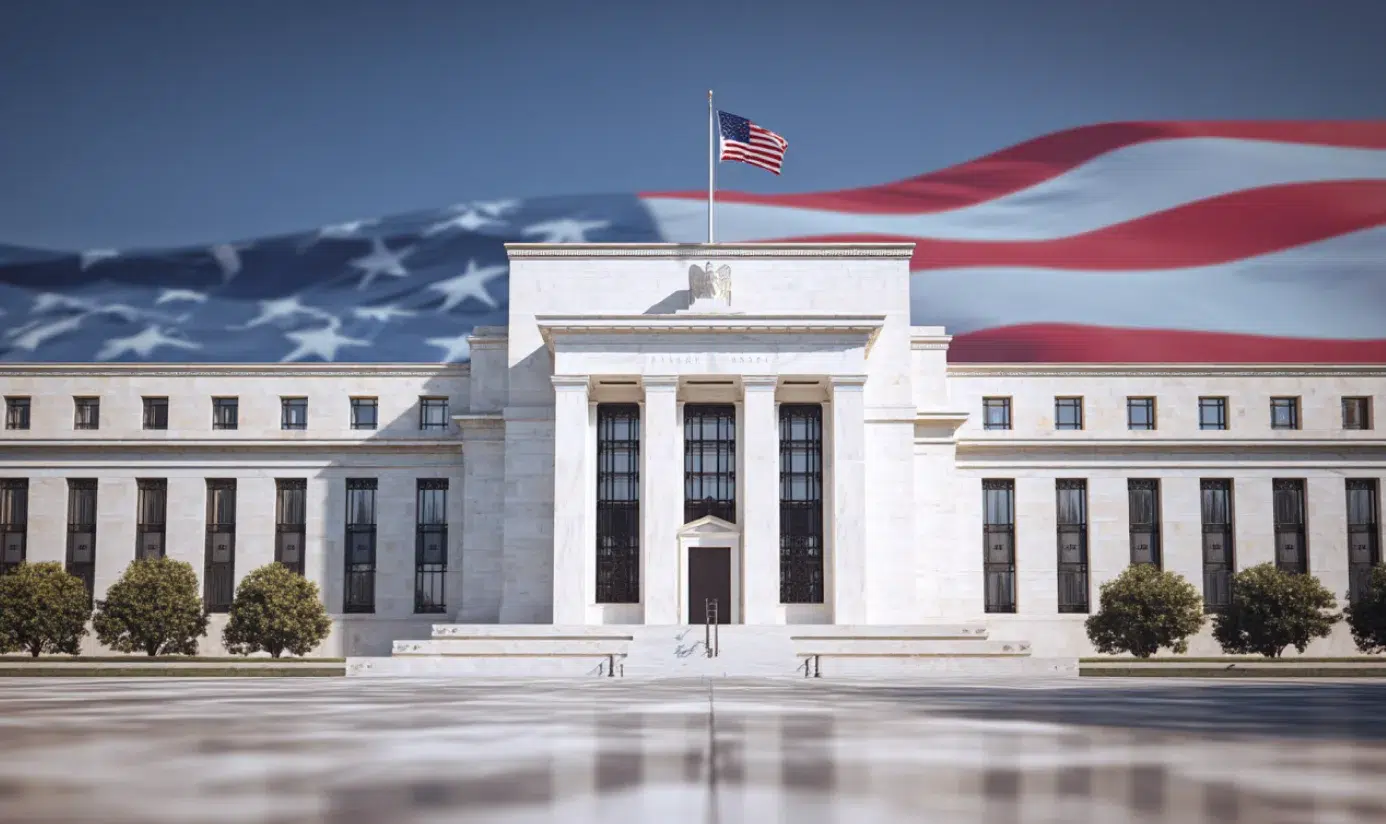
Federal Reserve Bank of Boston President Susan Collins has warned that higher interest rates may sometimes be necessary to control inflation, even as borrowing costs continue to make housing less affordable across the United States.
Summary- Boston Fed President Susan Collins said higher interest rates may sometimes be necessary to control inflation, despite making housing more expensive.
- Collins argued that tighter monetary policy can hurt housing construction and mortgage demand but helps maintain price stability over the longer term.
- Bitcoin fell below $70,000 as investors weighed inflation concerns and the possibility of further Federal Reserve interest rate hikes.
- US spot Bitcoin ETFs recorded nearly $300 million in withdrawals on November 11, with BlackRock’s IBIT accounting for most of the outflows.
In her November 13 speech at the Boston Fed’s 70th Economic Conference, Collins acknowledged that tighter monetary policy can hurt homebuyers and construction activity but argued that keeping inflation under control provides lasting benefits for the economy.
“In the near term, the higher interest rates sometimes needed to cool the economy and keep inflation in check can make homes more expensive to buy and to build,” Collins said.
She added that stable prices create more predictable economic conditions over the longer term, which ultimately benefit the housing market.
Her comments come as investors increasingly expect another Federal Reserve interest rate hike in December, with Bitcoin and other cryptocurrencies already under pressure from persistent inflation and weakening institutional demand.
Fed’s Collins says tighter policy can benefit housing over time
During her remarks, Collins pointed to the difficulties facing American households after several years of rising property prices and borrowing costs.
She said the surge in home prices since the pandemic, combined with higher mortgage rates since early 2022, has pushed homeownership beyond the reach of many Americans.
The problem has affected businesses as well. According to Collins, employers across New England have struggled to recruit workers because suitable housing is either unavailable or too expensive.
She cited cases involving physicians, mechanics, scientists and hospitality workers who withdrew from job opportunities because they could not find affordable places to live.
You might also like: Crypto market sees brief relief after cooler US PPI dataHousing construction has faced its own difficulties, with some projects slowing or stalling because of shortages of skilled construction workers.
Collins explained that monetary policy can have an unusually large influence on housing because both construction investment and mortgage demand are sensitive to interest rates.
Although tighter policy can limit new housing supply and discourage mortgage borrowing, she maintained that controlling inflation sometimes requires such measures.
“Tighter policy is needed at times to ensure price stability,” Collins said, pointing to the longer-term benefits for housing and the economy.
What could higher interest rates mean for Bitcoin and crypto?
The remarks arrive during a difficult period for cryptocurrencies, with expectations of further monetary tightening weighing on investor sentiment.
Bitcoin fell below $70,000 on November 13, trading near $69,300 as selling pressure continued across risk assets. Ethereum slipped toward $1,950, while technology stocks faced similar weakness.
Higher interest rates generally make Treasury securities and other interest-bearing investments more attractive, potentially reducing demand for cryptocurrencies that do not provide comparable fixed income.
The pressure has become more visible since the latest US inflation report.
As crypto.news previously reported, Bitcoin fell below $74,000 on November 10 after consumer prices rose 0.4% in October, exceeding economists’ expectations of 0.3%.
Core inflation, which excludes food and energy, rose 0.3%, compared with forecasts of 0.2%.
The stronger-than-expected figures prompted traders to reconsider how aggressively the Fed might raise borrowing costs at its December meeting.
On November 10, Polymarket traders assigned an 85% probability to a quarter-point increase, with another 12.7% assigned to a larger move.
Deutsche Bank has taken a similarly cautious view, forecasting three consecutive quarter-point rate hikes in December, January and March, which would take the federal funds target range to 4.50%–4.75%.
Institutional cryptocurrency investment has weakened alongside those expectations.
US spot Bitcoin ETFs recorded $299.9 million in net withdrawals on November 11, with BlackRock’s IBIT accounting for $269.73 million.
The withdrawals brought total outflows to roughly $1.44 billion across five consecutive trading sessions, while Ethereum ETFs lost another $144.81 million that day.
The Federal Reserve’s next interest rate decision is scheduled for December 9. Investors will receive the minutes of its October policy meeting on November 18, followed by the October personal consumption expenditures inflation report on November 25.
Read more: Hyperliquid faces fairness questions as Wintermute wins 76% of auctionsUS crypto regulation hub
Crypto mining in the US: federal rules and the state map
Crypto kiosk rules by state: bans, licenses and the fraud data
Crypto ETF rules in the US: how a fund gets listed now
Crypto banking access in the US: master accounts, the chokepoint, and what changed
CFTC and crypto in 2026: what the agency now governs
Is crypto legal in the US? Yes, and here is the structure
Crypto executive orders: what the White House has actually ordered
SEC crypto enforcement in 2026: from registration war to fraud beat
IRS crypto tax rules in 2026: what actually gets taxed
The OCC and crypto: national trust charters, explained
View allDeep Dives
 Feature
Read more - Nvidia faces scrutiny over China. What about the Trump family’s UAE crypto ties?
Nvidia faces scrutiny over China. What about the Trump family’s UAE crypto ties?
3 hours ago Feature
Read more - Wall Street wants crypto’s perpetual futures. The fight is over the rules
Wall Street wants crypto’s perpetual futures. The fight is over the rules
7 hours ago Feature
Read more - Ethereum made transactions cheaper. Where does that leave ETH?
Ethereum made transactions cheaper. Where does that leave ETH?
 ETH
Ethereum
8 hours ago
 Feature
Read more - Bitcoin holders are selling to pay the bills. MARA shows why
Bitcoin holders are selling to pay the bills. MARA shows why
 BTC
Bitcoin
8 hours ago
 News
Read more - Exclusive: Canton Strategic CEO warns MEV could raise costs for tokenized stock traders
Exclusive: Canton Strategic CEO warns MEV could raise costs for tokenized stock traders
8 hours ago Feature
Read more - The crypto developer who passes the interview and becomes the security threat
The crypto developer who passes the interview and becomes the security threat
1 day ago Feature
Read more - Inside XRP Ledger’s lending plan, where the borrower posts no collateral
Inside XRP Ledger’s lending plan, where the borrower posts no collateral
 XRP
XRP
1 day ago
 Feature
Read more - Strategy faces MSCI’s exit. Does that put its Bitcoin buying at risk?
Strategy faces MSCI’s exit. Does that put its Bitcoin buying at risk?
BTC
Bitcoin
1 day ago
 Feature
Read more - Nvidia’s Jensen Huang crisis reaches crypto through more than Bitcoin
Nvidia’s Jensen Huang crisis reaches crypto through more than Bitcoin
BTC
Bitcoin
1 day ago
 Feature
Read more - From tokenized shares to usable collateral inside DTCC’s new service
From tokenized shares to usable collateral inside DTCC’s new service
2 days ago
News
Read more - Ethereum, XRP, PI fall as US PPI inflation reaches 6.5% Ethereum, XRP, PI fall as US PPI inflation reaches 6.5%
42 minutes ago News
Read more - Crypto market sees brief relief after cooler US PPI data
Crypto market sees brief relief after cooler US PPI data
1 hour ago Markets
Read more - Bitcoin price falls 4%, can BTC recover above $70,000?
Bitcoin price falls 4%, can BTC recover above $70,000?
BTC
Bitcoin
2 hours ago