End of Crypto Trading? How AI Replaces Ones Who Pumped Bitcoin (BTC)
Opinions By Arman Shirinyan Nov 24, 2026 AI agents could make momentum trading faster and more volatile, but speed alone does not guarantee a durable edge.Advertisement

- From Rule-Based Trading to Agentic Execution
- Speed Does Not Guarantee an Edge
- Institutions and Human Judgment Still Matter
The “pump” trade could be taken to new extremes. While some may still be able to use their influence to promote a token, causing others to pile in, it could now be left up to AI to scour socials/wallet activity for abnormal trading volume, assess momentum rankings, etc. and execute on these opportunities faster than those that may be slower to react.
All things considered, agents may exacerbate many of the existing issues with crypto, from short lived moves/reversals, to dangerous herding and even more pronounced drawdowns.
From Rule-Based Trading to Agentic Execution
Automation is not necessarily a new occurrence in the space, from simple rule-based trading (implement a certain set of rules when X occurs) to algo trading (use algos to spread out trading activity to avoid market impact), but it appears to be shifting from humans implementing strategies to letting AI make decisions and execute.
HOT Stories LINK, AAVE and UNI Now Supported by Fidelity Bitcoin, XRP Hit by $875 Million Squeeze After Nvidia Euphoria Fades: Main Crypto News This MorningA February 2026 study from the Journal of Futures Markets found sub-second trading patterns in BTC/ETH perpetual/spot markets exhibiting behavior consistent with algo trading for liquidity, increasing volatility and trading costs with no significant impact on prices.
Advertisement
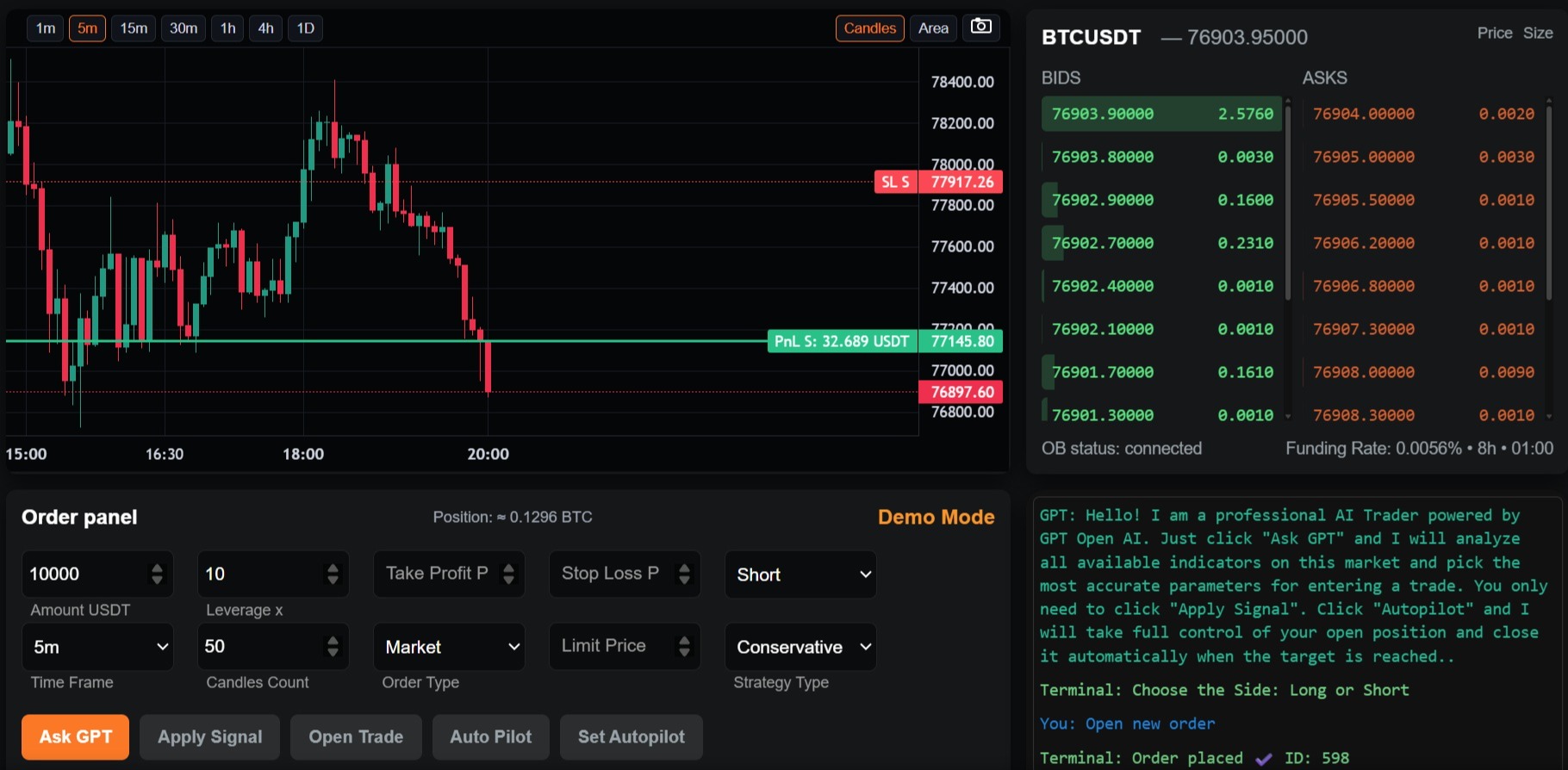
In August 2026, Binance rolled out Agent OS allowing builders to access exchange trading functionality and data via AI agents.
Coinbase Ventures released a comprehensive breakdown of the crypto agentic stack from data, to agent building tools, to execution/compliance in November. Instead of dictating each trade, users may be able to assign high-level goals (i.e. follow momentum, hedge position, etc.) for agents to implement 24/7.
Automation will likely accelerate across the crypto space. While macro events, ETF inflows/outflows, large holders, etc. will still have an impact on Bitcoin, it’s likely that many more aspects/trades will become automated.
AdvertisementTime will tell how pervasive agentic trading will become, but the era of a small group of traders/influencers/chat rooms able to move the needle via FOMO/hype seems poised to face stiff competition from AI that never sleeps.
Speed Does Not Guarantee an Edge
AI is not necessarily intelligent. A 2026 study published in the journal Frontiers in Blockchain studied machine-learning strategies using crypto market data and found that many strategies became highly overfit and offered no viable edge for retail traders once realistic trading fees were taken into account.

Also, strategies that performed well on one cryptocurrency did not necessarily perform well on others. Faster processing speeds can’t make bad data good, can’t identify all false narratives and can’t insulate a strategy from sudden shifts in market regimes.
Institutions and Human Judgment Still Matter
Are institutional investors still relevant? Can they protect themselves? Absolutely.
Institutions are (and will continue to be) an important source of capital, liquidity and price discovery (particularly for Bitcoin). A 2026 study using BTC data from 2012–2025 found that as the market has matured, Bitcoin has seen increased trading volume, decreasing transaction costs and increasing market efficiency.

Wintermute reported that in the first half of 2026 institutional clients accounted for 72% of total spot trading volume on its OTC desk (note: this is Wintermute’s OTC desk and is not representative of the entire market). It’s also worth noting that many institutional investors do employ quantitative strategies and state-of-the-art execution technologies.
While larger investors may have access to better data, faster infrastructure, cross-venue surveillance capabilities and stricter risk management protocols (and can limit their exposure and monitor abnormal order flow), there’s only so much that institutional investors can do to protect themselves.
Institutional investors can’t control a 24/7 global market with liquidity spread across multiple venues and derivatives markets. They also can’t assume that all AIs are created equal/safe (as Binance’s launch of its own AI demonstrated prompt injection risks and limited visibility into external AIs’ trading logic/reasons for trading).
Finally, during times of stress, risk management/contingency protocols (used by many investors) could be a crowded exit for funds that employ similar strategies.
The future is not “AI replaces every trader.” It will likely see continued automation of certain aspects of trading (i.e. execution, short-term alpha hunting, etc.) and a continued shift in the value-add that humans bring to the table (i.e. capital allocation, risk management, original research, granting/trading bots permission to trade, etc.).
While AI/bots may continue to squeeze spreads in normal market conditions, they may exacerbate drawdowns/cascades during times of market stress as strategies compete with one another.
At the end of the day, Bitcoin will still be bought/sold, it’s just a question of who gets to make those decisions.
#Bitcoin#AI- From Rule-Based Trading to Agentic Execution
- Speed Does Not Guarantee an Edge
- Institutions and Human Judgment Still Matter
Related articles
NewsNov 24, 2026 LINK, AAVE and UNI Now Supported by FidelityByAlex DovbnyaNewsNov 24, 2026 $9 Billion Wealth Manager Discloses XRP ETF StakeByAlex DovbnyaAdvertisement AdvertisementLatest Press releasesTronBid Launches Mass USDT Payouts for Streamlined Bulk Payments on TRONSynopsis Edition 7: International Online Summit to Take Place on December 14–20, 2026Hashi Mainnet is Live With 20-Plus Partners, Bringing Bitcoin Finance to Sui at ScaleAdvertisement
Recommended articles
GuidesNov 19, 2026 Can AI Hack Smart Contracts? How AI Agents Are Changing Blockchain SecurityInterviewsOct 2, 2026 'Your Wallet Doesn't Decide When You Need Your Backup': Trezor Analyst on the Fake App ProblemInterviewsSep 25, 2026 From Post-Quantum Cryptography to AI: QoreChain Founder Liviu Epure on the Future of BlockchainOpinionsSep 15, 2026 Clarity Act Fails Again: What It Means for CryptoReviewsSep 11, 2026 QoreChain Review: Post-Quantum Security With Triple-VM BlockchainPrice IndexBitcoin (BTC) Price IndexEthereum (ETH) Price IndexXRP Price IndexCardano (ADA) Price IndexDogecoin (DOGE) Price IndexShiba Inu (SHIB) Price IndexTron (TRX) Price IndexPolygon (POL) Price IndexLitecoin (LTC) Price IndexSolana (SOL) Price IndexZcash (ZEC) Price IndexHyperliquid (HYPE) Price IndexOur social mediaThere's a lot to see there, too Popular articlesOpinionsNov 24, 2026
End of Crypto Trading? How AI Replaces Ones Who Pumped Bitcoin (BTC)BitcoinAIArman ShirinyanNewsNov 24, 2026
LINK, AAVE and UNI Now Supported by FidelityFidelity Chainlink (LINK) NewsAAVEUSDUniswap NewsAlex DovbnyaNewsNov 24, 2026
$9 Billion Wealth Manager Discloses XRP ETF StakeRipple NewsXRP NewsAlex DovbnyaShow allAdvertisement
Subscribe to daily newsletter
AdvertisementAD