Blockchain security firm CertiK said it has completed independent verification of XRP Ledger Foundation and Partior’s filed self-attestations under the Global Layer One Market Infrastructure Toolkit.
The CertiK review of the Ripple-linked network and Partior announced Wednesday, November 18, is the first visible result since the project was taken over by a bank-run standards body two weeks ago.
What is the GL1 review that XRP Ledger passed?
The GL1 MI Toolkit is a framework of 112 controls that allows financial institutions and market infrastructure operators to use self-attestations or independent auditor verifications to grade the suitability of their digital financial infrastructures. The Toolkit, now at version 2.0, runs on a framework grounded in international standards and industry best practices.
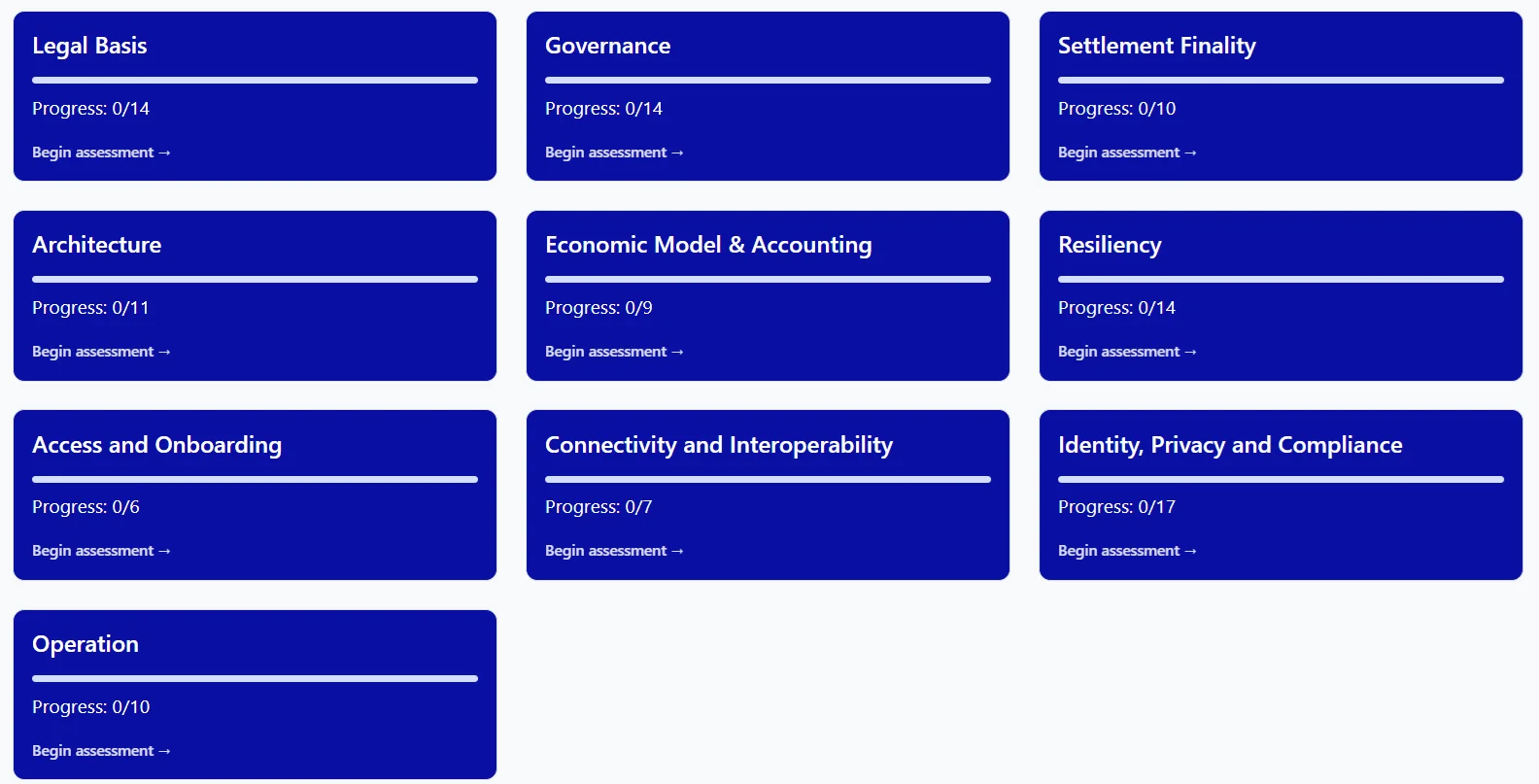
According to CertiK’s account of its XRP Ledger and Partior verifications, the blockchain security firm reviewed all 112 controls in the GL1 MI Toolkit to determine which ones it could verify independently.
Next, it checked both projects’ claims against the Toolkit’s Architecture and Resiliency principles, drawing on code, configurations, logs, and test results to assess whether the controls were built as described.
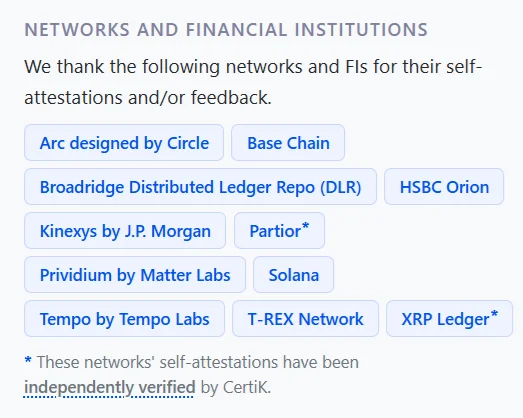
CertiK’s independent verifications of XRP Ledger and Partior join other network self-attestations, such as Base, HSBC Orion, Kinexys by J.P. Morgan and Solana listed on the GL site.
CertiK’s Head of Capital Markets and Policy Esme Pau emphasized the importance of independent verification, writing in the November 18 statement, “Independent technical verification helps operators substantiate their self-attestations and gives institutions evidence they can weigh in their own infrastructure assessments.”
Banks take over GL1 from Singapore’s MAS
GL1 went from an initiative convened by the Monetary Authority of Singapore (MAS) three years ago under Project Guardian to Global Layer One Organisation, a Singapore non-profit announced on November 4 by HSBC, Kinexys by J.P. Morgan, MUFG Bank, Societe Generale-FORGE and Standard Chartered when they over framework governance.
The announcement also noted that the bank-led body will be open to banks, fintechs, market infrastructure providers and policymakers.
GL1 founders had to scale back their ambitions of creating a shared open ledger for regulated finance over intellectual property concerns. The framework they went forward with contained two toolkits:
One for assessing whether they can connect with a network
The other for programmable compliance
The MI Toolkit itself was launched in November 2025 with legal input from firms including Linklaters, which said it advised GL1 on the framework’s development.
What the CertiK verification means for XRPL’s institutional pitch
XRP Ledger is a public blockchain that launched in 2012 and is closely tied to Ripple, built for payments, token issuance and on-chain trading. Going through the same controls check used by bank-connected networks fits a run of institutional moves on the ledger.
Earlier in 2026, XRPL activated XLS-81, a “permissioned DEX” that lets approved institutions run gated trading venues with know-your-customer and anti-money-laundering controls, alongside XLS-85, which extended native escrow to stablecoins and tokenized real-world assets.
Ripple also joined JPMorgan, Mastercard and Ondo Finance in a cross-border tokenized U.S. Treasury redemption that settled the asset leg on XRPL while banks handled the cash, Cryptopolitan reported earlier this year.
If you're reading this, you’re already ahead. Stay there with our newsletter.