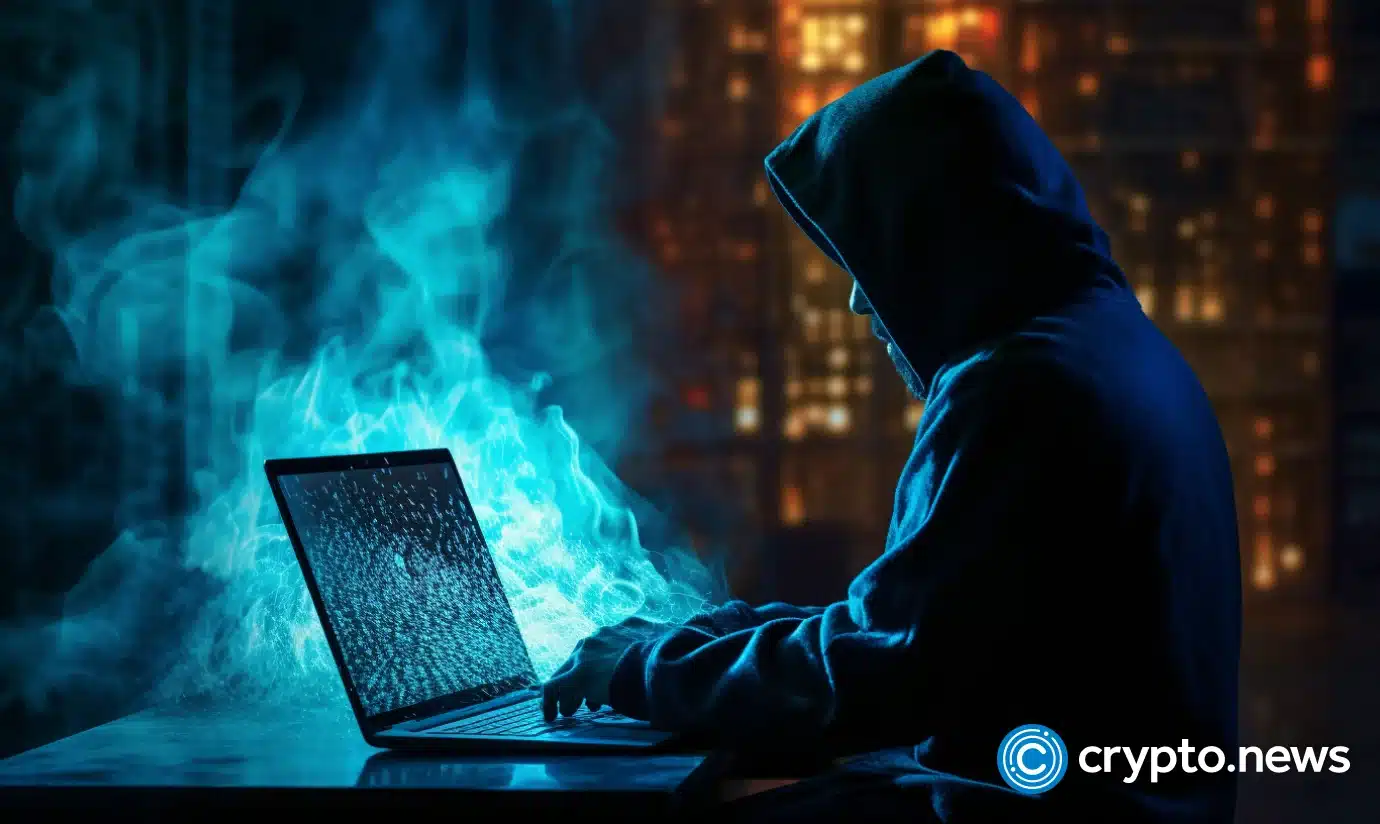
Keplr has suspended Google and Apple wallet logins after a security breach involving Web3Auth exposed users’ private keys, with blockchain investigators tracing more than $6 million in transfers from over 44,000 wallets.
Summary- Keplr suspended Google and Apple wallet logins after Web3Auth infrastructure exposed some users’ private keys.
- Bitquery traced approximately $6.01 million in transfers involving more than 44,000 wallets across Cosmos networks.
- Keplr’s co-founder estimated roughly 20% of social-login accounts were potentially exposed, with fewer actually exploited.
- Web3Auth began whitehat recovery operations, warning that protective transfers could resemble unauthorized wallet draining activity.
- Keplr advised social-login users to move remaining liquid assets into secure recovery-phrase or hardware-wallet accounts.
In its November 7 security notice, Keplr Wallet confirmed receiving reports of unauthorized transactions involving accounts created through social logins. The company linked the incident to Web3Auth, a wallet authentication provider owned by Consensys, and began working with its team to investigate the affected accounts.
We have received reports of unauthorized transactions on some Keplr accounts created with Google or Apple login. We flagged this to the @Web3Auth team and have been working with them on the investigation since.
— Keplr Wallet (@keplrwallet) November 7, 2026
Based on our initial assessment: if you created your Keplr wallet… https://t.co/EoXTC9ehpP
The breach has left some users unable to access their wallets through the usual login process, while others have reported missing funds. Keplr co-founder Josh Lee estimated that roughly 20% of the platform’s Google and Apple login accounts could be affected, although he said only a fraction had been exploited.
You might also like: Cosmos Hub secures 1.23 million ATOM after Neutron attackKeplr Wallet Hack Traced to Web3Auth Infrastructure Breach
The security problem originated in infrastructure operated by Web3Auth, which allows users to create and access cryptocurrency wallets through existing online accounts without manually managing recovery phrases during onboarding.
Lee explained that the incident was not caused by a compromise of Keplr’s own wallet code. Instead, the affected accounts relied on an external authentication service that subsequently experienced a security failure.
“This was not a hack of Keplr’s code. The incident originated at Web3Auth, a provider Keplr uses,” Lee said.
Web3Auth subsequently acknowledged an infrastructure problem affecting certain embedded wallets used by Keplr. The company temporarily suspended its embedded wallet service while investigating the breach and identifying accounts requiring protection.
“After an initial investigation, we’ve found no evidence that MetaMask users are impacted,” the provider said.
Although Web3Auth supports authentication services for third-party applications, the company has not published a complete list of other wallet providers exposed to the vulnerability. It has not publicly explained the technical entry point that allowed the affected private keys to become compromised.
Blockchain Data Tracks $6M Across Thousands of Wallets
Blockchain intelligence firm Bitquery traced approximately $6.01 million in assets across two collection addresses associated with the November 6–7 incident.
Its investigation identified 44,041 wallets across seven Cosmos networks, alongside 7,603 affected addresses on Injective. Because some wallets appeared across multiple networks, the researchers estimated roughly 44,700 distinct affected wallets after accounting for overlapping addresses.
Cosmos Hub accounted for approximately $3.5 million of the recorded assets, with additional transfers involving Osmosis, Celestia, Akash, Noble, Babylon, dYdX and Injective.
The investigation found that approximately 86% of affected wallets on the seven linked networks experienced outgoing transfers after Keplr issued its initial warning. Researchers recorded transactions continuing on Cosmos Hub during their November 7 observation period.
Bitquery identified transfers involving 1.96 million staked ATOM, with the transactions using staking-share tokenization to move positions without completing the usual 21-day unbonding period.
However, Web3Auth subsequently disclosed that authorized recovery teams were moving assets through similar transaction paths.
Consequently, the recorded transfers cannot all be treated as confirmed attacker-controlled losses without distinguishing recovery addresses from malicious destinations.
Web3Auth Begins Whitehat Recovery for Exposed Accounts
With some vulnerable accounts still holding cryptocurrency, Web3Auth and its partners have started whitehat recovery operations to protect funds before attackers can access them.
The company said recovery teams were using the same technical route exploited during the incident, which had caused some protective transactions to be mistaken for additional theft.
Keplr subsequently warned that certain Google and Apple login wallets might display reduced or empty balances because of those protection measures. Staked and locked assets require more complicated recovery procedures, meaning the work could take longer.
Lee had previously said the majority of potentially exposed accounts might still be recoverable, although the company has not announced a final amount secured or returned to users.
Keplr has not publicly established whether affected customers will receive reimbursement for confirmed losses.
Keplr Advises Social Login Users to Move Remaining Funds
For customers who created wallets using recovery phrases or hardware devices, Keplr said the incident had not affected their accounts. Its latest guidance specifically concerns wallets created through Google or Apple authentication.
The company advised social-login users against sending additional funds into potentially compromised accounts and instructed them to move any remaining liquid assets into recovery-phrase or hardware-wallet accounts.
It is working with Web3Auth on a method for customers to establish whether their accounts were affected. Users were warned against unsolicited messages and links claiming to offer asset recovery.
The incident follows other cryptocurrency security failures involving wallet credentials. In July, crypto.news covered an Injective software compromise involving a malicious developer package that exposed private keys and recovery phrases.
An October Qubic wallet vulnerability similarly involved compromised wallet security, although investigators traced that incident to weaknesses in seed generation rather than third-party social authentication.
Web3Auth and Keplr continue coordinating account protection and recovery, while the provider prepares information to distinguish authorized recovery transactions from transfers associated with the attacker.
Read more: Former Holograph employee gets 5 years over $14M HLG token theftUS crypto regulation hub
Crypto mining in the US: federal rules and the state map
Crypto kiosk rules by state: bans, licenses and the fraud data
Crypto ETF rules in the US: how a fund gets listed now
Crypto banking access in the US: master accounts, the chokepoint, and what changed
CFTC and crypto in 2026: what the agency now governs
Is crypto legal in the US? Yes, and here is the structure
Crypto executive orders: what the White House has actually ordered
SEC crypto enforcement in 2026: from registration war to fraud beat
IRS crypto tax rules in 2026: what actually gets taxed
The OCC and crypto: national trust charters, explained
View allDeep Dives
 Feature
Read more - Can companies stop third parties trading tokenized US shares?
Can companies stop third parties trading tokenized US shares?
20 hours ago Recap
Read more - Binance recovery, US crypto bill talks, Bitcoin ETF exits | Weekly recap
Binance recovery, US crypto bill talks, Bitcoin ETF exits | Weekly recap
24 hours ago Feature
Read more - Pi Network is moving more rewards onchain. When can holders sell?
Pi Network is moving more rewards onchain. When can holders sell?
 PI
Pi Network
2 days ago
 Feature
Read more - Bitcoin ETFs lost $430 million as Fidelity reversed course
Bitcoin ETFs lost $430 million as Fidelity reversed course
 BTC
Bitcoin
2 days ago
 Feature
Read more - Ripple wants to pay suppliers in RLUSD. Where does XRP fit?
Ripple wants to pay suppliers in RLUSD. Where does XRP fit?
2 days ago Feature
Read more - How Polygon would return 70 million stolen POL to recovery wallets
How Polygon would return 70 million stolen POL to recovery wallets
 MATIC
MATIC (migrated to POL)
2 days ago
 Feature
Read more - Can Ethereum make rollups feel like one network?
Can Ethereum make rollups feel like one network?
 ETH
Ethereum
2 days ago
 Feature
Read more - USDC pays for gas on Arc. How much demand comes from payments?
USDC pays for gas on Arc. How much demand comes from payments?
3 days ago Feature
Read more - Zcash is cutting block times. What changes for users and miners?
Zcash is cutting block times. What changes for users and miners?
 ZEC
Zcash
3 days ago
 Feature
Read more - Can the CLARITY Act still pass before Democrats take control?
Can the CLARITY Act still pass before Democrats take control?
3 days ago News
Read more - Binance hack sparks heavy outflows as futures traders stay: Santiment
Binance hack sparks heavy outflows as futures traders stay: Santiment
1 day ago News
Read more - Binance hack triggers smaller DeFi run than $292M Kelp exploit: Sentora
Binance hack triggers smaller DeFi run than $292M Kelp exploit: Sentora
2 days ago News
Read more - South Korea’s GOPAX halts crypto trading, withdrawals after hacking threat
South Korea’s GOPAX halts crypto trading, withdrawals after hacking threat
2 days ago