 The payment rail for your crypto. One card. Every chain. No KYC. Spend with Apple Pay or Google Pay in 180+ countries.
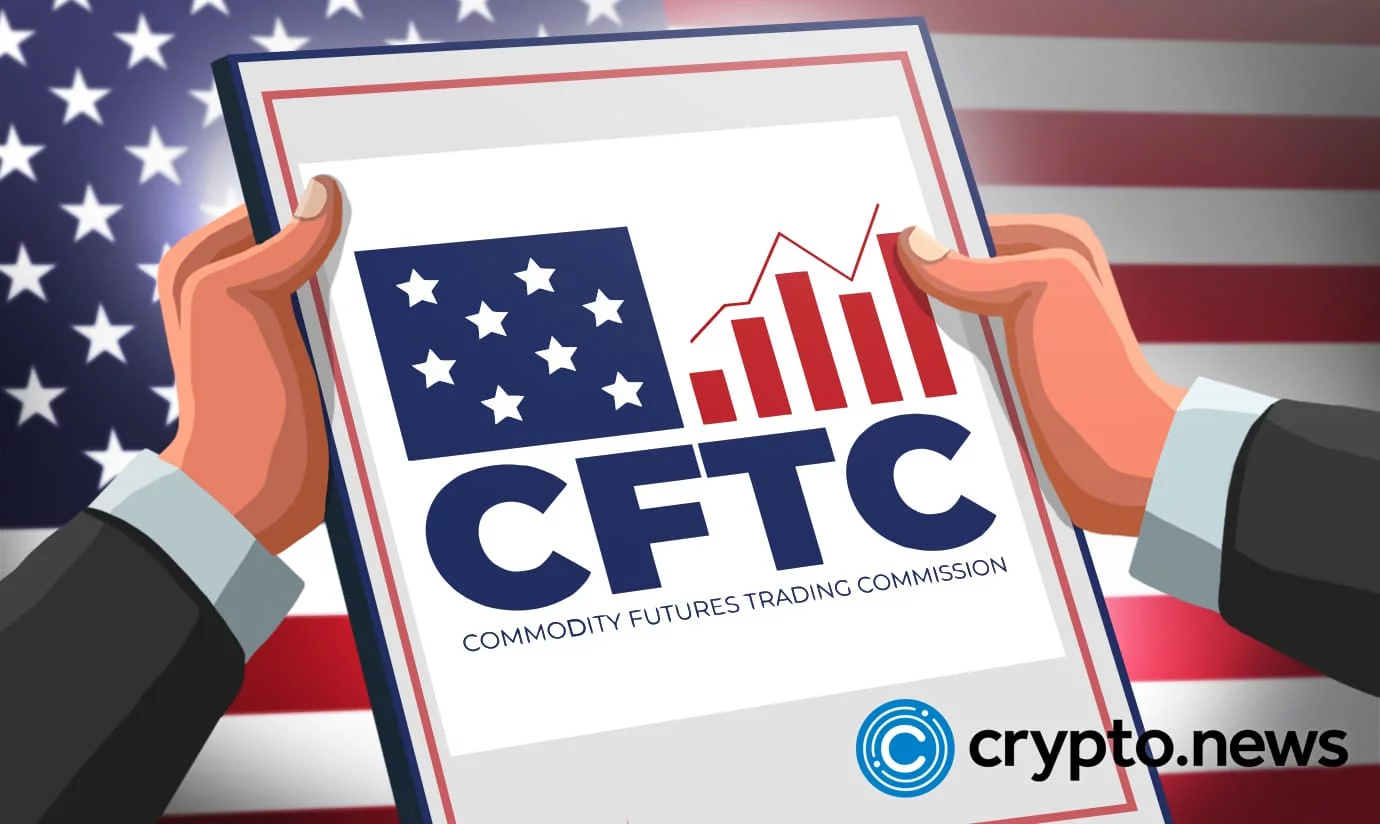
The US Commodity Futures Trading Commission (CFTC) has warned prediction market operator Kalshi that it could face enforcement charges over alleged failures to properly notify regulators about dozens of proposed contracts.
Summary- The CFTC has reportedly warned Kalshi about possible enforcement charges involving notifications for proposed prediction market contracts.
- Kalshi disputes the reported scale, describing the issue as a filing error involving a handful of contracts.
- The investigation concerns self-certification rules that allow regulated exchanges to list products without explicit prior approval.
- Democratic lawmakers reportedly plan increased prediction market oversight following their November 2026 midterm election victories.
- Polymarket faces a separate CFTC investigation examining compliance with restrictions associated with its 2022 settlement.
The agency has spent several months investigating whether Kalshi complied with federal requirements for submitting new products before making them available for trading, according to a November 10 report by POLITICO. A person familiar with the investigation said the regulator had privately notified the company about possible charges, although the matter could still end in a settlement.
Kalshi acknowledged the warning but disputed the reported scale of the filing problems, saying the issue concerned fewer contracts than suggested.
You might also like: Coinbase, Kalshi, Kraken parent back CFTC in stock perps lawsuitCFTC investigates Kalshi over prediction market contract filings
The investigation centers on the self-certification process, which allows federally regulated exchanges to introduce certain derivatives without obtaining explicit approval from the CFTC for each product.
Under the process, exchanges must notify the regulator and certify that proposed contracts comply with applicable requirements. Those obligations include providing information about settlement procedures and assessing whether a contract is vulnerable to manipulation.
Kalshi spokesperson Elisabeth Diana described the agency’s concerns as “a procedural error involving the submission of a handful of contracts, many of which weren’t live.”
“We are already addressing the issue,” Diana said.
Her response differs from the account provided by the person familiar with the investigation, who said regulators were reviewing notification requirements involving dozens of proposed products.
The distinction between the two accounts has not been resolved publicly. The CFTC has not announced formal charges, identified the contracts under review or disclosed a proposed penalty.
The agency did not immediately respond to requests for comment about the investigation, according to the reporting.
Kalshi operates a CFTC-regulated derivatives exchange that offers contracts tied to elections, financial markets, sports and other events. Customers trade positions based on whether a specified outcome will occur, with settlement determined by the contract’s published rules.
CFTC warned exchanges about self-certification practices in July
The reported investigation follows a July 24 advisory in which the CFTC instructed regulated exchanges to follow proper procedures when submitting event contract certifications.
The agency raised concerns about filings that combine numerous possible event contracts into one submission using broad, template-style descriptions.
In its advisory, the Division of Market Oversight explained that such filings could make it difficult to determine whether operators had provided enough information about contract settlement, market data and regulatory compliance.
The regulator specifically warned that “broad, template-style certifications should not be submitted.”
However, the guidance allows closely related contracts to be certified together under certain conditions, subject to the applicable filing requirements.
The advisory did not identify Kalshi as having violated those rules. It addressed the filing practices of designated contract markets generally.
Self-certification has become part of the regulatory debate surrounding prediction markets, particularly as exchanges introduce contracts covering new political, sporting and financial events.
CME Group CEO Terry Duffy previously questioned whether some event contracts were sufficiently protected against manipulation, expressing concern about the types of products reaching regulated markets.
Kalshi faces scrutiny as Democrats prepare tougher oversight
The reported enforcement warning comes as Democratic lawmakers prepare to examine the prediction market industry more closely following their victories in the November midterm elections.
POLITICO reported that Democrats intend to step up congressional oversight of prediction market operators when the next Congress begins.
The industry has faced disagreements over whether some event contracts fall under federal derivatives regulation or state gambling laws.
Kalshi has argued that its products are federally regulated derivatives, while several state authorities have challenged the company’s ability to offer certain contracts without complying with local gambling restrictions.
The company previously secured a legal victory against the CFTC in 2024 involving political event contracts, after which its available markets expanded.
Its business has since moved into other derivatives categories. As crypto.news previously reported, Kalshi joined Coinbase, Payward, DRW, Jump Trading and Paradigm in supporting the regulator’s authority over US stock-linked perpetual futures.
The companies submitted a proposed legal brief in a separate dispute over whether existing federal law permits those derivatives to trade on regulated exchanges.
Meanwhile, Kalshi completed a $1 billion funding round in October at a $40 billion valuation. The financing, announced in late October, was co-led by Wellington Management and Sequoia Capital.
Polymarket faces separate CFTC investigation over US access
Kalshi is not the only prediction market operator facing federal scrutiny.
The CFTC is separately examining whether Polymarket complied with restrictions associated with its 2022 enforcement settlement, including measures intended to prevent unauthorized access by US users.
In January 2022, the regulator ordered Polymarket to pay a $1.4 million civil penalty for operating an unregistered facility offering event-based binary options.
The settlement required the company to wind down noncompliant markets and stop violating applicable federal derivatives regulations.
The latest investigation includes questions about the offshore platform’s geographic restrictions and whether American users were able to access its services.
The reported Polymarket review covers advertising, location controls and safeguards associated with its separate US operation.
No final enforcement decision has been announced in either investigation.
Read more: Here’s why Ethereum price is falling, but could ETH rebound before hitting $2,000?US crypto regulation hub
Crypto mining in the US: federal rules and the state map
Crypto kiosk rules by state: bans, licenses and the fraud data
Crypto ETF rules in the US: how a fund gets listed now
Crypto banking access in the US: master accounts, the chokepoint, and what changed
CFTC and crypto in 2026: what the agency now governs
Is crypto legal in the US? Yes, and here is the structure
Crypto executive orders: what the White House has actually ordered
SEC crypto enforcement in 2026: from registration war to fraud beat
IRS crypto tax rules in 2026: what actually gets taxed
The OCC and crypto: national trust charters, explained
View allDeep Dives
 Feature
Read more - The Bitcoin inheritance gap between a will and a wallet
The Bitcoin inheritance gap between a will and a wallet
 BTC
Bitcoin
22 hours ago
 Feature
Read more - Can you still withdraw from Base or Arbitrum if the sequencer goes down?
Can you still withdraw from Base or Arbitrum if the sequencer goes down?
22 hours ago Feature
Read more - Inside a Visa card payment that settles in USDC
Inside a Visa card payment that settles in USDC
22 hours ago Feature
Read more - How small deposits drained 77 ACryptoS vaults and what users can still withdraw
How small deposits drained 77 ACryptoS vaults and what users can still withdraw
2 days ago Feature
Read more - Ethereum put Glamsterdam’s Hoodi fork on hold. What did auditors find?
Ethereum put Glamsterdam’s Hoodi fork on hold. What did auditors find?
 ETH
Ethereum
2 days ago
 Feature
Read more - What happens to Solana validators that miss the Agave 4.4.1 upgrade?
What happens to Solana validators that miss the Agave 4.4.1 upgrade?
2 days ago Feature
Read more - Can crypto recover if US inflation keeps rate hike bets alive?
Can crypto recover if US inflation keeps rate hike bets alive?
2 days ago Feature
Read more - Why did the ED raid CoinDCX and Delta Exchange? What users should know
Why did the ED raid CoinDCX and Delta Exchange? What users should know
3 days ago Feature
Read more - Can companies stop third parties trading tokenized US shares?
Can companies stop third parties trading tokenized US shares?
4 days ago Recap
Read more - Binance recovery, US crypto bill talks, Bitcoin ETF exits | Weekly recap
Binance recovery, US crypto bill talks, Bitcoin ETF exits | Weekly recap
4 days ago News
Read more - Coinbase, Kalshi, Kraken parent back CFTC in stock perps lawsuit
Coinbase, Kalshi, Kraken parent back CFTC in stock perps lawsuit
22 hours ago News
Read more - Kalshi tops $2.5b in midterm trading, nearly doubling 2024 volume
Kalshi tops $2.5b in midterm trading, nearly doubling 2024 volume
4 days ago News
Read more - Kalshi faces federal injunction over sports contracts on California tribal lands
Kalshi faces federal injunction over sports contracts on California tribal lands
5 days ago