
 The payment rail for your crypto. One card. Every chain. No KYC. Spend with Apple Pay or Google Pay in 180+ countries.
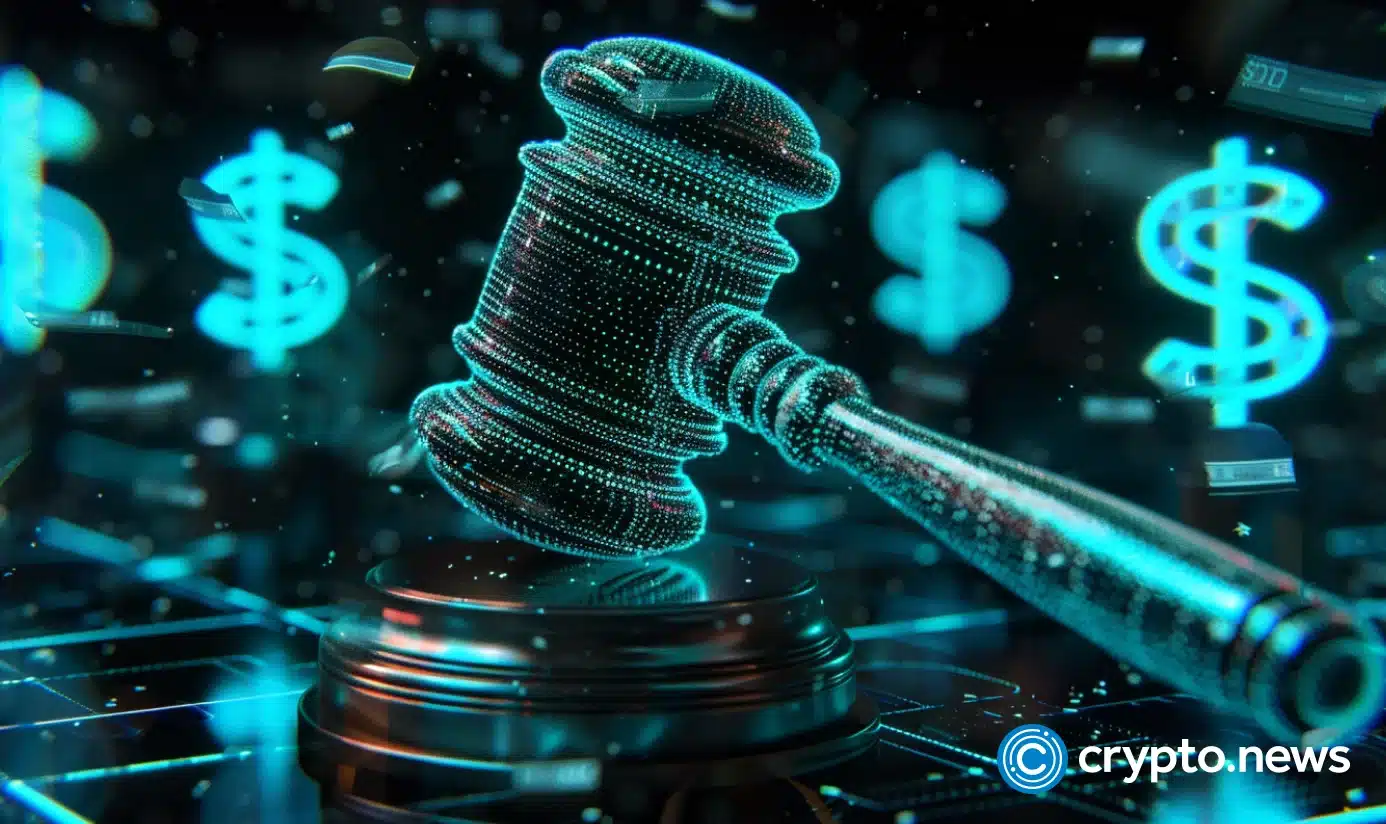
Coinbase, Kalshi, Kraken parent Payward and three trading firms have asked a federal court to accept a legal brief supporting the Commodity Futures Trading Commission’s authority to regulate perpetual futures tied to individual U.S. stocks.
Summary- Coinbase, Kalshi, Payward, DRW, Jump Trading and Paradigm filed a proposed amicus brief supporting CFTC authority.
- The Capital Markets Alliance lawsuit challenges federal approvals allowing single-stock perpetual futures on regulated exchanges.
- Coinbase Derivatives, KalshiEX and Bitnomial submitted applications that were deemed approved on November 2, 2026.
- A federal judge denied emergency relief but questioned whether perpetual contracts qualify as security futures.
- The industry filing argues that existing federal law provides for joint SEC and CFTC oversight.
According to a November 9 court filing, the companies joined DRW Holdings, Jump Trading and Paradigm Operations in defending the regulator against a lawsuit brought by the Capital Markets Alliance Association. The dispute concerns whether single-stock perpetual contracts qualify as security futures under joint CFTC and Securities and Exchange Commission oversight.
You might also like: Stock perps avoid trading halt as judge questions CFTC authorityCoinbase and other firms defend CFTC authority over stock perps
The six companies filed their proposed amicus brief in the U.S. District Court for the Southern District of New York, where the alliance is challenging the CFTC’s handling of applications to list equity perpetual futures.
The case, Capital Markets Alliance Association v. Commodity Futures Trading Commission, No. 1:26-cv-09608-LGS, concerns applications submitted by Coinbase Derivatives, KalshiEX and Bitnomial Exchange.
All three exchanges filed applications on September 18 to list perpetual contracts tied to individual large-cap U.S. stocks. Their applications were deemed approved on November 2 under the regulator’s product review process.
Payward owns Kraken and acquired Bitnomial earlier this year. DRW, Jump Trading and Paradigm identified themselves as market participants with existing or potential interests in equity perpetual trading.
In their filing, the companies argued that the Commodity Exchange Act permits perpetual contracts to fall within the existing security futures framework, even without a fixed expiration date.
“A security future—by definition—cannot be a swap,” the firms stated, citing the Commodity Exchange Act.
They maintained that the relevant legal question concerns whether equity perpetuals satisfy the definition of security futures, not whether their structure resembles other derivatives.
Coinbase general counsel Molly Abraham defended the filing on November 10, arguing that Congress established a framework for security futures through legislation enacted in 2000.
Today @Coinbase, @Kalshi, @Payward, DRW Holdings, @Jumptrading, and @Paradigm moved for leave to file an amicus brief defending the @CFTC’s authority to regulate single stock perpetuals in the US.
— Molly Abraham (@mollyisonchain) November 10, 2026
The law is clear. Under the CEA and the securities futures framework Congress…
Capital Markets Alliance challenges CFTC approval
The legal dispute began when the Capital Markets Alliance filed suit on November 2, seeking to overturn the CFTC’s treatment of single-stock perpetual derivatives.
The association, whose members include Cboe and Citadel Securities, argues that contracts without expiration dates should qualify as security-based swaps under SEC jurisdiction.
Its complaint alleges that the CFTC exceeded its authority by allowing the contracts to proceed as security futures. The association further claims the regulator failed to explain its decision adequately or consider potential consequences for securities markets.
Adam Ford, the association’s secretary, said the introduction of products outside established regulatory requirements could weaken investor protections and market oversight.
The plaintiff has asked the court to vacate the challenged approvals and prevent the CFTC from giving them effect while litigation continues.
However, the companies supporting the regulator argue that perpetual futures share the main characteristics of traditional futures contracts, including standardized terms, margin requirements and centralized clearing.
Unlike conventional futures, perpetual contracts have no scheduled expiration date. Funding payments help maintain their relationship with the referenced stock price, while traders can close positions without waiting for a contract to mature.
The firms contend that the existing security futures framework already provides for oversight by both federal regulators.
Federal judge questions classification of perpetual futures
The industry filing follows a November 3 ruling in which U.S. District Judge Valerie Caproni denied the alliance’s request for a temporary restraining order.
As crypto.news previously reported on the ruling, the judge found that the alliance had not demonstrated sufficiently immediate harm to justify emergency intervention.
However, Caproni’s preliminary assessment favored the plaintiff’s interpretation of the law.
The judge questioned whether perpetual derivatives satisfied the statutory definition of security futures because they do not provide for delivery of a security on a specified future date.
She found that the products appeared instead to meet the definition of security-based swaps, which generally fall under SEC regulation.
Despite those findings, the court left the approvals in place and directed the parties to continue briefing the separate preliminary injunction request.
The CFTC’s opposition was due November 6, while the alliance’s response was scheduled for November 10, subject to changes by the assigned judge.
SEC and CFTC oversight remains disputed
The controversy follows the CFTC’s November 3 clearance of the first equity perpetual futures products for eligible domestic trading venues.
Under the security futures framework, participating exchanges must maintain CFTC designation and satisfy applicable SEC registration requirements.
Coinbase had already submitted SEC registrations in September covering its derivatives exchange and brokerage operations.
The companies’ proposed amicus brief argues that both regulators participated in discussions about the treatment of perpetual derivatives before the applications received approval.
It states that the SEC participated in the public consultation process and that exchanges submitted their listing standards to both agencies.
During previous reporting on the lawsuit, the SEC declined to comment on the litigation while expressing support for financial products operating under appropriate regulatory oversight.
Coinbase Vice Chairman Ryan VanGrack subsequently defended bringing perpetual futures into regulated U.S. markets.
“The U.S. should lead, not cede, this space,” VanGrack wrote.
The six firms have asked the court to reject the alliance’s preliminary injunction request, leaving the underlying dispute over regulatory classification for further consideration.
Read more: TRON surpasses 413 million accounts, but what do network stats show?US crypto regulation hub
Crypto mining in the US: federal rules and the state map
Crypto kiosk rules by state: bans, licenses and the fraud data
Crypto ETF rules in the US: how a fund gets listed now
Crypto banking access in the US: master accounts, the chokepoint, and what changed
CFTC and crypto in 2026: what the agency now governs
Is crypto legal in the US? Yes, and here is the structure
Crypto executive orders: what the White House has actually ordered
SEC crypto enforcement in 2026: from registration war to fraud beat
IRS crypto tax rules in 2026: what actually gets taxed
The OCC and crypto: national trust charters, explained
View allDeep Dives
 Feature
Read more - How small deposits drained 77 ACryptoS vaults and what users can still withdraw
How small deposits drained 77 ACryptoS vaults and what users can still withdraw
22 hours ago Feature
Read more - Ethereum put Glamsterdam’s Hoodi fork on hold. What did auditors find?
Ethereum put Glamsterdam’s Hoodi fork on hold. What did auditors find?
 ETH
Ethereum
22 hours ago
 Feature
Read more - What happens to Solana validators that miss the Agave 4.4.1 upgrade?
What happens to Solana validators that miss the Agave 4.4.1 upgrade?
22 hours ago Feature
Read more - Can crypto recover if US inflation keeps rate hike bets alive?
Can crypto recover if US inflation keeps rate hike bets alive?
23 hours ago Feature
Read more - Why did the ED raid CoinDCX and Delta Exchange? What users should know
Why did the ED raid CoinDCX and Delta Exchange? What users should know
2 days ago Feature
Read more - Can companies stop third parties trading tokenized US shares?
Can companies stop third parties trading tokenized US shares?
3 days ago Recap
Read more - Binance recovery, US crypto bill talks, Bitcoin ETF exits | Weekly recap
Binance recovery, US crypto bill talks, Bitcoin ETF exits | Weekly recap
3 days ago Feature
Read more - Pi Network is moving more rewards onchain. When can holders sell?
Pi Network is moving more rewards onchain. When can holders sell?
 PI
Pi Network
4 days ago
 Feature
Read more - Bitcoin ETFs lost $430 million as Fidelity reversed course
Bitcoin ETFs lost $430 million as Fidelity reversed course
 BTC
Bitcoin
4 days ago
 Feature
Read more - Ripple wants to pay suppliers in RLUSD. Where does XRP fit?
Ripple wants to pay suppliers in RLUSD. Where does XRP fit?
4 days ago News
Read more - Coinbase wins full US banking approval, but with key restrictions
Coinbase wins full US banking approval, but with key restrictions
21 hours ago News
Read more - Kalshi tops $2.5b in midterm trading, nearly doubling 2024 volume
Kalshi tops $2.5b in midterm trading, nearly doubling 2024 volume
3 days ago News
Read more - Stablecoins offer sub-cent payments, Armstrong says, as critics flag risks
Stablecoins offer sub-cent payments, Armstrong says, as critics flag risks
4 days ago