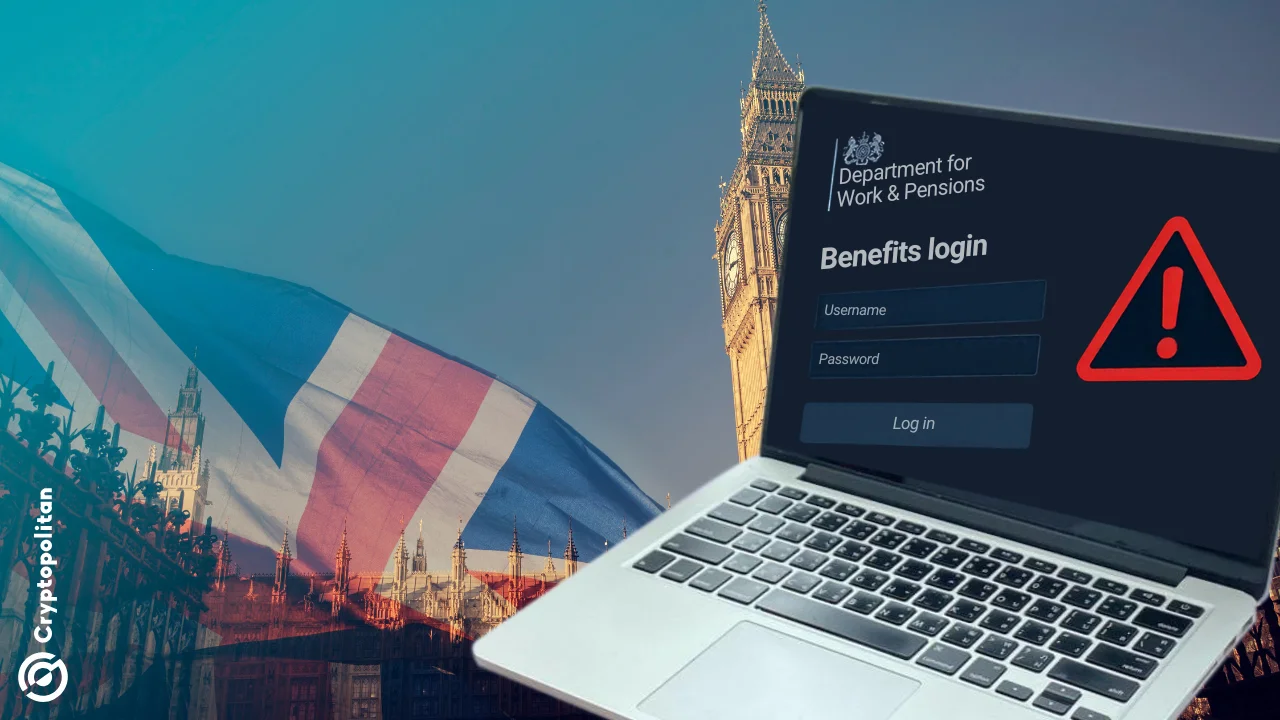
Several of the services offered by the UK’s Department for Work and Pensions (DWP) have been taken offline following reports of a cyber incident.
The department says regular benefit and pension payments will still go out as normal while it works to bring the rest of its services back.
What happened at the UK DWP?
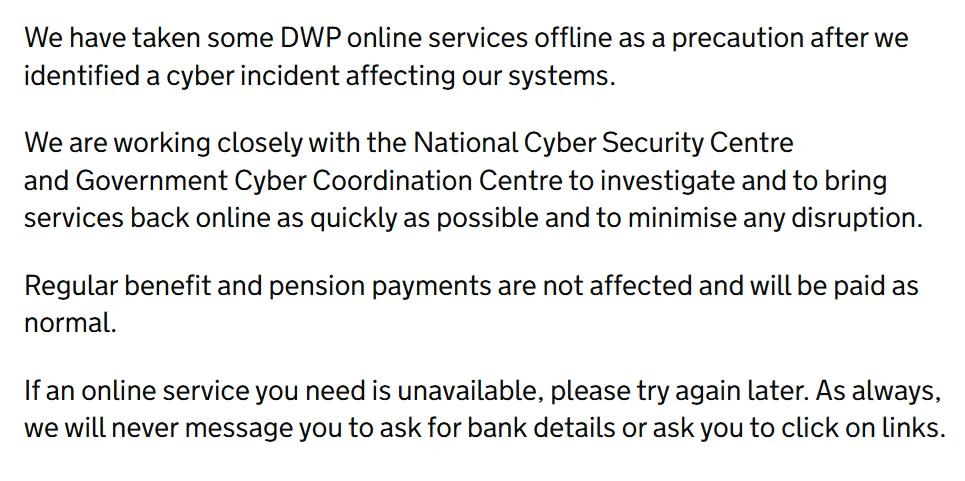
On Friday, the Department for Work and Pensions (DWP), which pays benefits and state pensions to millions of people in the UK, shut down some of its online tools after it found a cyber incident. By around 09:00 GMT, some services, including the Universal Credit login, had stopped working.
The DWP has clarified that the systems were only turned off as a precaution while it investigates the situation with the National Cyber Security Centre and the Government Cyber Coordination Centre.
No information has been given on what kind of incident the department experienced or whether anyone’s personal data was reached. In the meantime, the DWP has reiterated that it will never message users to ask for bank details or send them links to click.
DWP will never ask for your bank details over the phone or by text message pic.twitter.com/lIYKHhy8eV
— Department for Work and Pensions (@DWPgovuk) November 27, 2026
The UK has highlighted its status as a potential priority target for cyberattacks. An official review by the Department for Science, Innovation and Technology rated the cyber risk to the government as “critically high.”
In January, after the review was released, the government published a Government Cyber Action Plan, a project backed by more than £210 million (about $280 million) and a new Government Cyber Unit.
This month, Richard Horne of the National Cyber Security Centre said there was a real chance of an unprecedented rise in cyber incidents.
In October, a serious flaw in PHP, a programming language used by most of the web, forced 32 government services offline, with four more partly down. The Department for Education also confirmed in July that about 607,000 records were exposed in a separate attack.
Are other countries experiencing cyber attacks?
Japan declared its first cybersecurity state of emergency in October. A breach at the cloud company IDC Frontier, which is owned by SoftBank Corp. (TYO: 9434), spread to hundreds of its customers. Officials there estimated that the personal data of about 14 million people was exposed.
The U.S. Treasury’s Financial Crimes Enforcement Network took its systems offline this week after someone gained unauthorized access. Just hours earlier, intruders had reportedly broken into an open-source intelligence system shared by the CIA, the National Geospatial-Intelligence Agency and the Office of the Director of National Intelligence.
President Donald Trump also separately confirmed that there was a hack of the FBI’s National Crime Information Center.
Investigators suspect that some of these U.S. break-ins used Artex, an AI tool that a Chinese engineer released in July to help defenders. The tool has since been used for attacks, and it has also been linked to incidents in Japan and South Korea.
If you're reading this, you’re already ahead. Stay there with our newsletter.